

Pay will always play an important role in attracting and retaining employees, but it is no longer the only factor people consider when deciding whether to stay with an organisation.
Following several years of economic uncertainty, employees are more aware of fairness in the workplace and more likely to question how decisions around pay are made. Even where businesses are offering competitive salaries, a lack of transparency or inconsistency can quickly damage trust.
At the same time, many SMEs are facing increased costs across the board, from pensions and payroll to wider compliance obligations and day-to-day operating expenses. For many organisations, large annual pay rises simply are not financially sustainable.
This means businesses are increasingly needing to think differently about reward and focus not just on what they pay, but how supported, recognised and valued employees feel overall.

The term “total reward” refers to the full experience employees receive in return for the work they do, not just their salary.
A strong reward offering can include:
For many employees, these wider factors have a significant impact on job satisfaction and long-term loyalty.
When employees feel valued, listened to and supported, businesses are often able to maintain strong engagement even during periods where pay budgets are more limited.

One of the biggest causes of frustration around pay is often not the amount itself, but the perception that decisions are inconsistent or unclear.
Employees are far more likely to understand difficult business decisions when organisations communicate openly and apply fair, objective processes.
As the CIPD notes, “Fair and transparent reward practices are central to employee trust and retention.”
In practice, this means employers should aim to:
Even where budgets are tight, openness and consistency can go a long way in maintaining trust and morale.

One area that is often underestimated is recognition.
In many workplaces, formal recognition only happens during annual reviews or salary discussions. But day-to-day appreciation and acknowledgement can have just as much impact on engagement and retention.
Simple things such as thanking someone for their contribution, recognising progress, or giving employees opportunities to develop and take ownership can make people feel genuinely valued.
Importantly, effective recognition does not need to involve expensive reward schemes or bonuses.
Low-cost but meaningful approaches might include:
For SMEs in particular, creating a culture where people feel seen and appreciated can be one of the most effective retention tools available.

Line managers are often the people delivering pay decisions and responding to employee concerns, but many do not feel fully confident handling these conversations.
Poorly managed discussions around pay can quickly lead to frustration, disengagement or conflict, particularly where managers avoid difficult conversations or struggle to explain the rationale behind decisions.
ACAS highlights that “Clear communication about pay and conditions reduces workplace conflict.”
This makes manager support and training increasingly important. Managers should feel equipped to:
When managers communicate confidently and fairly, employees are far more likely to trust the process, even if outcomes are not always what they hoped for.

Leadership behaviour has a significant influence on how employees experience pay and reward within an organisation.
Employees are often more accepting of financial constraints when leaders are honest, transparent and consistent in their communication.
Strong leaders tend to:
On the other hand, inconsistency, poor communication or avoidance can quickly undermine trust.
Ultimately, reward is not just about policies or salary reviews — it is about culture, communication and relationships.

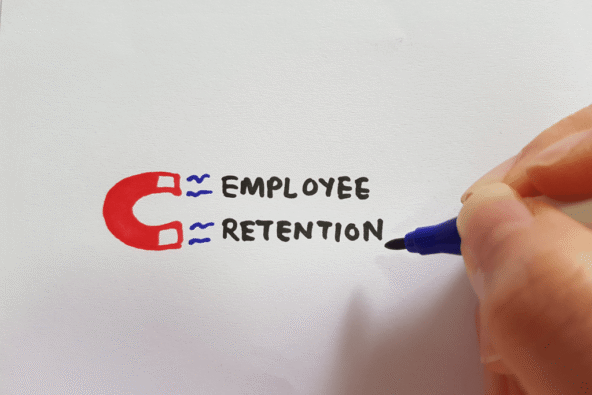
Reward and retention strategies can be difficult to get right, particularly when budgets are tight and expectations remain high.
At Metro HR, we support SMEs with practical, commercially-focused HR advice that helps businesses balance fairness, engagement and financial sustainability. Whether you need support reviewing pay structures, improving manager confidence around pay conversations, strengthening recognition practices or developing a broader retention strategy, we’re here to help.
If you’d like to review your current approach to pay, reward and retention, book a free consultation with Metro HR today.

Responsive site designed and developed by